 Snorkel
 From the surface
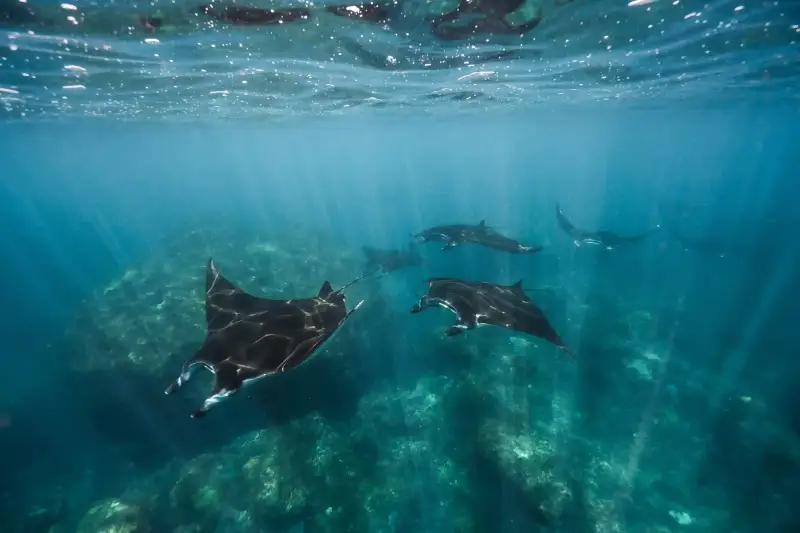
Mantas rise to within a couple of metres of the surface. No certification, no tank, and the best angle on the animal.

Anchorage · Karang Makassar
A cleaning station on a rubble reef, not a feeding ground. Mantas come to be cleaned, on their schedule — which is why the boat leaves before you would choose to.
Reef mantas hold position over the rubble while smaller fish clean them. They are not there for food and they are not there for you.
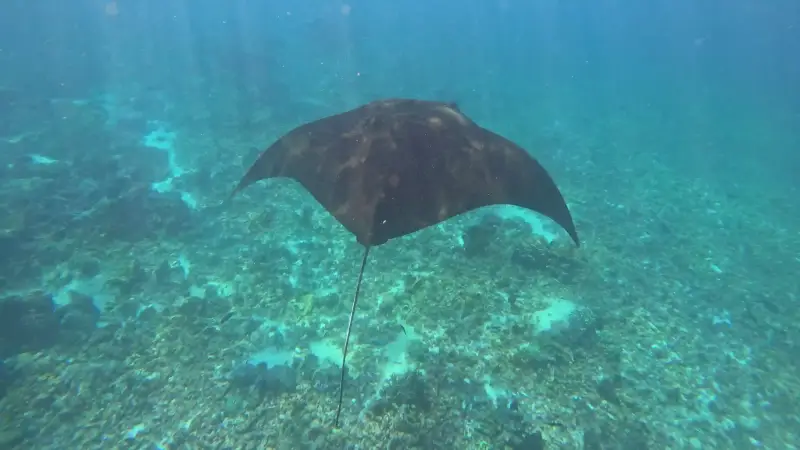
Sightings are likely, not guaranteed. Anyone promising mantas is selling something. Current can run hard here — the guide decides entry and exit, not the group.
This is one of the few sites where the snorkellers often get the better experience.
Snorkel Mantas rise to within a couple of metres of the surface. No certification, no tank, and the best angle on the animal.
A charter anchored nearby overnight can meet the tide. A day trip out of Labuan Bajo usually cannot.
Slack or gentle current is when the station is workable. That window moves roughly an hour later each day.
Being anchored an hour away the night before beats leaving Labuan Bajo at dawn.
If the current is wrong the stop is moved or dropped. That is the site being respected, not the trip failing.
No, and be careful with anyone who says yes. Sightings are high most of the year, and highest December to March — but these are wild animals at a cleaning station, not a show.
No. Mantas often rise close to the surface, and snorkellers frequently get the better view. Diving lets you sit still at the edge of the station, which is a different experience rather than a better one.
It can run hard. Entry and exit are guide-led and the stop gets moved if conditions are wrong. That call is not negotiable.
No. Touching is harmful and chasing ends the encounter. Stay still and horizontal, and they come closer than you expect.
The difference between a good Manta Point stop and a wasted one is an hour of planning nobody sees.
+62 811 3810 8110 sales@komodoluxury.com